Africa Opens Its Borders — And Reclaims Its Place at the Global Table
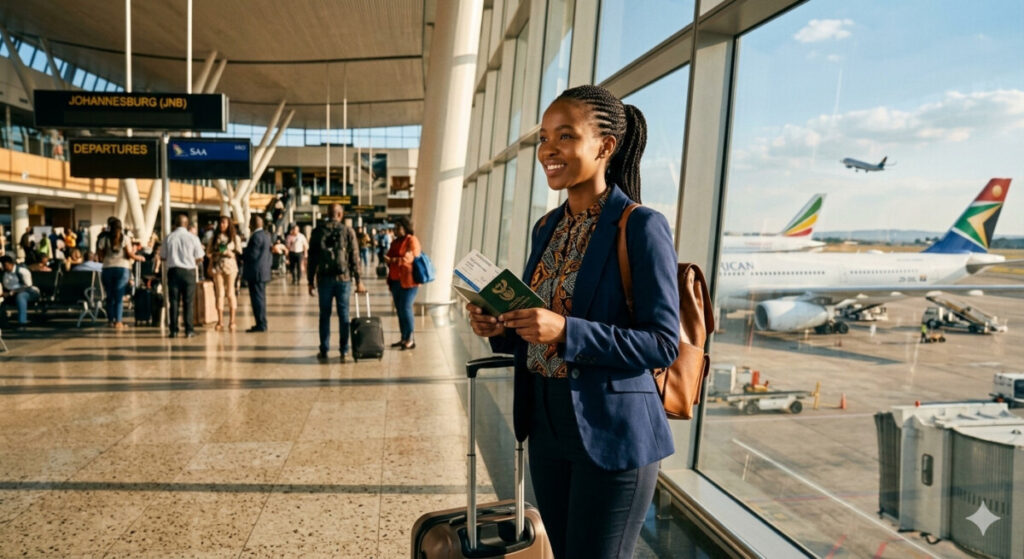
For decades, the story of Africa and travel has been written from the outside. African passport holders often faced some of the toughest travel restrictions in the world. Crossing borders within the continent was sometimes harder than flying to Europe. Entrepreneurs missed business opportunities, artists struggled to tour across African capitals, and tourists found it easier to visit Paris than Lagos.
But something remarkable is beginning to change.
Across the continent, governments are quietly dismantling some of the barriers that kept Africans apart for generations. Visa rules are being relaxed. Borders are opening. Travel policies are being rewritten.
This shift is not just about tourism.
It is about Africa repositioning itself in the global economic system.
And the story unfolding today suggests that the continent is finally preparing to sit at the global table not as a spectator—but as a serious player.
A Continent Divided by Its Own Borders
Africa has 55 countries, yet historically it has been one of the hardest regions in the world for its own citizens to travel within.
In many cases, African travelers needed visas to visit other African countries, a legacy of colonial-era borders and fragmented immigration policies.
The consequences were severe.
According to the Africa Visa Openness Index, only about 28% of travel routes within Africa allowed visa-free access in recent years—meaning that in most cases Africans still required visas to visit neighboring countries.
For a continent with over 1.4 billion people, that level of restriction was economically costly.
Businesses struggled to expand across borders.
Tourism industries remained underdeveloped.
Regional integration stalled.
The paradox was clear: Africa was politically independent but economically fragmented.
Recognizing this, African policymakers began pushing for a fundamental change.
The African Union’s Vision of Free Movement
At the heart of the transformation is a long-term initiative by the African Union: the Free Movement of People Protocol.
The policy seeks to allow Africans to travel, live, and work anywhere on the continent with fewer restrictions, similar to the European Union’s open-border system.
The logic behind the policy is simple.
If goods, services, and capital are moving across Africa through the African Continental Free Trade Area (AfCFTA), then people must also be able to move freely.
Without that mobility, economic integration remains incomplete.
While implementation has been slow, momentum is building.
And several countries are already leading the way.
Rwanda’s Bold Move: Visa-Free Africa
One of the most significant breakthroughs came from Rwanda.
In 2023, Rwanda announced that citizens of all African Union member states could enter the country without a visa.
African visitors can now stay in Rwanda for up to 30 days without paying visa fees, removing a major barrier to travel and business mobility.
The decision made Rwanda one of the most open countries in Africa for travelers from the continent.
The country has since maintained the top ranking in the Africa Visa Openness Index, a measure of how accessible African countries are to other Africans.
This policy is not symbolic.
It is strategic.
Kigali understands that attracting business conferences, investors, and tourists depends heavily on how easy it is to enter the country.
By eliminating visas, Rwanda positioned itself as a hub for regional connectivity.
Kenya Follows with Its Own Opening
Kenya soon followed with another bold step.
The country removed visa requirements for most African travelers and replaced them with a simplified digital travel authorization system.
The goal is clear: boost tourism, encourage trade, and position Kenya as one of Africa’s most accessible destinations.
For Kenya, the strategy is also economic diplomacy.
Tourism already contributes billions to the Kenyan economy. By opening borders, the government hopes to attract a growing African middle class that is increasingly traveling for business, leisure, and cultural exchange.
In fact, 40% of visitors to Kenya already come from other African countries, many traveling for business.
Opening the doors wider simply makes economic sense.
The Quiet Rise of Visa-Friendly Africa
Beyond Rwanda and Kenya, several other African countries are also moving toward more open travel policies.
Countries such as Benin, Seychelles, and The Gambia now offer visa-free access to all African travelers, setting an example for the rest of the continent.
Meanwhile, many others are adopting digital visa systems and visas on arrival.
By 2025:
- 31 African countries offered e-visas to African travelers
- Visa openness across the continent had steadily increased over the past decade.
These changes may appear administrative.
But their implications are enormous.
Every visa barrier removed is a new opportunity created—for trade, tourism, innovation, and cultural exchange.
Tourism: Africa’s Sleeping Giant
One of the biggest sectors set to benefit from open borders is tourism.
Africa possesses some of the world’s most extraordinary attractions:
- The Serengeti migration
- The Nile River
- Victoria Falls
- Sahara desert landscapes
- Mountain gorillas in Rwanda and Uganda
Yet Africa still captures a relatively small share of global tourism.
Visa restrictions have long been part of the problem.
When travel becomes easier, tourism expands dramatically.
That is why many African governments now view open borders as an economic strategy rather than simply an immigration issue.
Trade and Business Mobility
Tourism is only one part of the equation.
Business mobility may be even more important.
Under the African Continental Free Trade Area, the continent is building the largest free trade zone in the world, covering 1.3 billion people and a combined GDP of more than $3 trillion.
But trade agreements alone cannot build an integrated economy.
Entrepreneurs must travel.
Engineers must cross borders to work on projects.
Investors must meet partners face-to-face.
When visas block these interactions, economic growth slows.
That is why African policymakers increasingly see visa liberalization as a key pillar of economic development.
The Psychological Shift
Beyond economics, there is another transformation taking place.
A psychological one.
For many years, Africa’s narrative in global politics was shaped by dependency—aid, conflict, and instability dominated international headlines.
But the movement toward visa openness reflects something deeper: a continent asserting confidence in its future.
Instead of waiting for global approval, African governments are redesigning their own systems to serve African interests.
Opening borders sends a powerful message:
Africa believes in Africa.
Challenges Still Remain
Despite the progress, the journey toward full mobility is far from complete.
Some African countries still maintain strict visa regimes.
Infrastructure remains uneven.
Air travel within Africa is often expensive and complicated, with routes sometimes requiring travelers to transit through Europe or the Middle East.
Security concerns and bureaucratic inertia also slow reform.
And while the African Union’s free movement protocol exists, it has not yet been fully implemented across the continent.
Yet even with these challenges, the direction of travel is becoming clearer.
The trend is toward openness.
Africa’s Seat at the Global Table
For centuries, Africa’s borders were drawn by outsiders.
Trade routes were designed to export raw materials rather than connect African economies to each other.
The result was a continent rich in resources but fragmented in structure.
That structure is now beginning to change.
By opening borders, African countries are doing something profoundly strategic:
They are reconnecting the continent.
When Africans can move freely across their own continent, something powerful happens.
Ideas spread faster.
Businesses scale across markets.
Cultural exchange flourishes.
And the world begins to see Africa not as 55 isolated economies—but as one rising continental market.
Source: Rewriting the Future of Africa Travel
What you might have missed: Uganda’s New Migration Policy
